
Is my baby behind? Early warning signs of speech delay and when to contact a speech-language pathologist
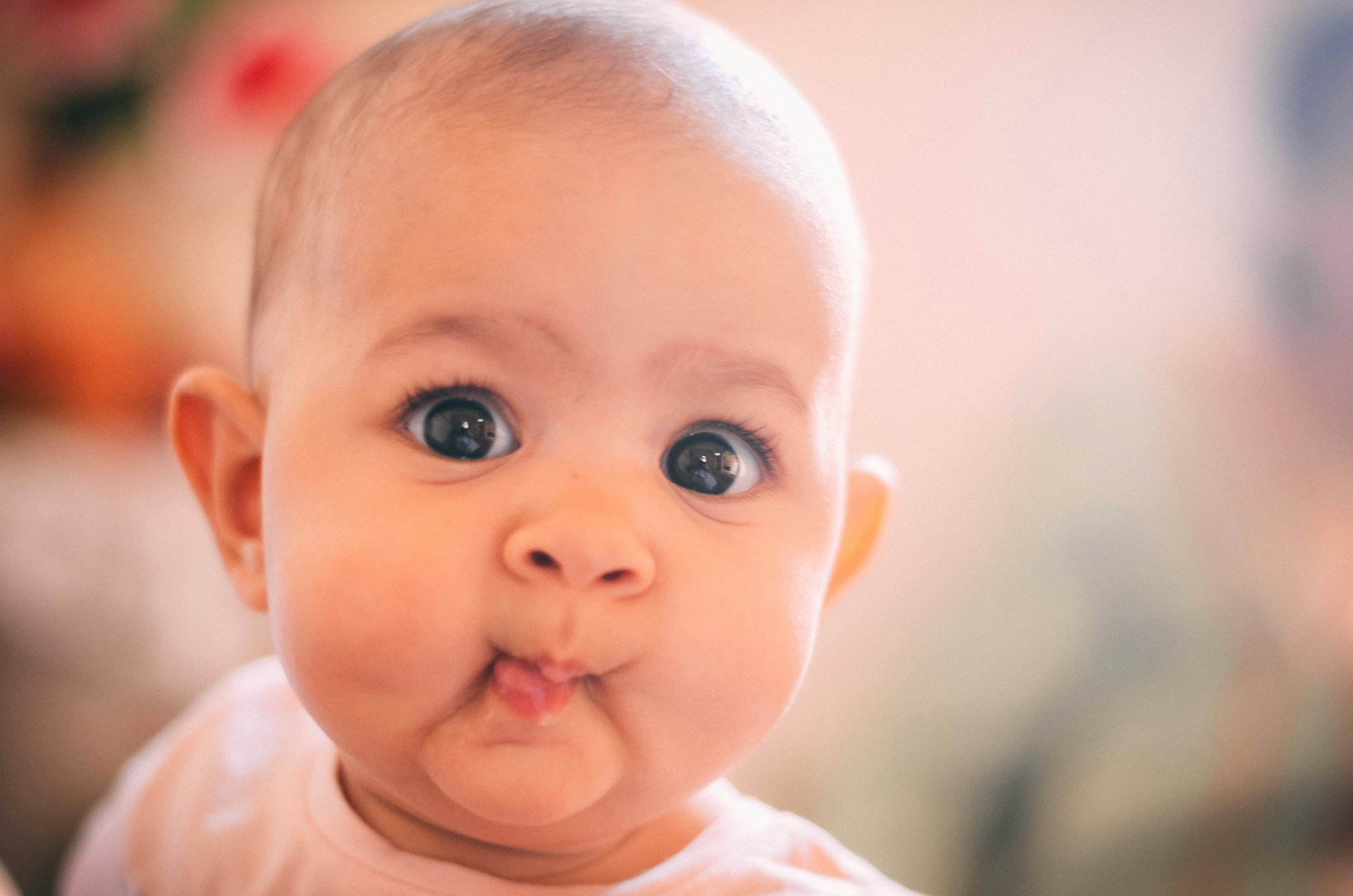
There's a particular kind of quiet worry that shows up at playgroup. Another baby in the circle says "mama" clearly, intentionally, looking right at her mother. You glance over at your own child, who is perfectly happy gnawing on a board book, and something small tightens in your chest. You don't want to panic. You don't want to be that parent. But you also can't quite shake the question: when do infants begin to talk, and is my baby behind?
That feeling isn't anxiety. It's attentiveness. And it's one of the most common things families bring to the pediatric speech-language pathologists at Speech Therapy For All P.C., serving children across Long Island and Brooklyn. The question of when infants begin to talk, what's typical, and what genuinely warrants a closer look deserves a straight, warm answer.
This article gives you exactly that: a clear month-by-month roadmap for infant speech development, specific red flags to take seriously, practical activities you can start today, and honest guidance on when to pick up the phone.
When do infants begin to talk: a month-by-month speech timeline
Think of this section as the map you wish someone had handed you in the hospital. These are developmental ranges aligned with CDC and AAP guidelines, not rigid deadlines stamped on a calendar. What matters most is the sequence: each stage builds directly on the one before it. A baby who skips cooing and jumps straight to babbling is worth watching, even if the babbling arrives "on time."
2 to 6 months: cooing and the start of vocal play
Around 2 to 3 months, most babies begin cooing. These soft "ooh" and "ah" sounds are not random noise, they are the very first conversational turn your baby takes. When your baby coos and you coo back, you're having a real exchange.
By 3 months, most infants coo reliably and start varying their pitch and volume, which shows that the auditory and vocal systems are already working together. These early sounds are the raw material for everything that follows.
By 6 months, the CDC notes that babies are typically taking turns making sounds with caregivers, squealing, and using sounds to express both joy and displeasure, all excellent signs.
When do infants begin to talk: 9 to 12 months and first real words
Around 6 to 9 months, babbling shifts from simple vowel sounds to repeated consonant-vowel combinations: "ba-ba," "da-da," "ma-ma." By 9 months, varied babbling with different syllable combinations is the norm, along with the beginning of gestures like lifting arms to be picked up and looking when their name is called. These gestures matter just as much as spoken sounds.
Around the first birthday, most children produce their first true meaningful word. "Mama" or "dada" counts as a first word only when your child uses it consistently and intentionally, not just as a string of babble sounds. Waving "bye-bye" and understanding the word "no" are also expected by 12 months. Gestures and comprehension are as important as spoken words at this stage, so watch for the full picture, not just what comes out of your child's mouth.
18 to 24 months: a vocabulary surge and two-word combinations
Between 18 and 24 months, language typically takes off. According to CDC milestone guidance, most toddlers are trying to say at least a few words by 18 months and can follow one-step directions without a gesture cue, like handing you a toy when asked. By 24 months, the benchmark is 50 or more words and the beginning of two-word combinations like "more milk" or "big dog."
Those two-word combinations are a milestone worth celebrating, because they signal something bigger than vocabulary. When a child starts combining words, they're building grammar, not just labeling objects. That's a qualitative leap in expressive language development, and it's one of the clearest signs that communication is moving forward on schedule.
Red flags worth taking seriously (and not just "waiting to see")
Pediatricians sometimes offer reassurance in the form of "let's check back in a few months." That advice comes from a good place, but when it comes to speech and language development, earlier evaluation consistently produces better outcomes, according to CDC and AAP guidance. There is no benefit to delaying assessment when real warning signs are present.
Signs to watch before the first birthday
By 9 to 12 months, take note if your baby is not babbling with consonant sounds, is not responding reliably to their name, or is not using any communicative gestures like pointing, waving, or reaching toward objects to show you something. A baby who doesn't turn toward sounds, isn't engaging in back-and-forth communication, or shows limited eye contact by 9 months deserves a conversation with a professional sooner rather than later. These are not catastrophic signs, but they are meaningful ones.
The 18-month and 24-month thresholds that matter most
Fewer than 10 words at 18 months and fewer than 50 words or no two-word phrases by 24 months are established referral thresholds, not soft suggestions. Heavy reliance on pointing and pulling instead of words, along with difficulty understanding simple instructions without gesture cues, are also meaningful signals at this age. At 24 months, clinical guidance is direct: do not use watchful waiting. If your child is approaching that birthday without meeting these benchmarks, request an evaluation. If you're trying to tell whether your toddler is simply a late bloomer, our guide to late talker signs walks through the difference.
When regression is always an urgent signal
It can be frightening to watch a child lose skills they once had, and that fear is worth acting on. Loss of previously acquired words, babbling, eye contact, or social communication is a flag that requires prompt attention at any age, no exceptions. This is different from a temporary plateau. Regression, meaning skills that were present and then disappeared, calls for evaluation, not reassurance. If your child was saying a handful of words and then stopped, or was making eye contact and now avoids it, reach out to a professional right away.
Simple activities that genuinely move the needle on language development
The good news is that most of what genuinely helps looks like things you're probably already doing. The difference is doing them more intentionally. For more ideas, try these speech therapy games you can play at home or our picks for the best toys for speech therapy.
Serve-and-return: the most underrated speech tool in your home
Serve-and-return is a simple idea with a significant body of research behind it. When your baby babbles, you respond. When your baby makes eye contact or reaches toward something, you mirror it and add language. A baby says "ba," you say "ball! Yes, that's the ball!", and then you wait. That pause is important. You're giving your child room to take the next turn.
These reciprocal exchanges are one of the most well-documented predictors of early language development. They don't require toys, apps, or structured lesson plans, just your presence and your willingness to respond. Brief, genuine back-and-forth exchanges during diaper changes, meals, or play consistently outperform passive exposure to background television for early language outcomes.
Reading aloud, narrating routines, and the power of repetition
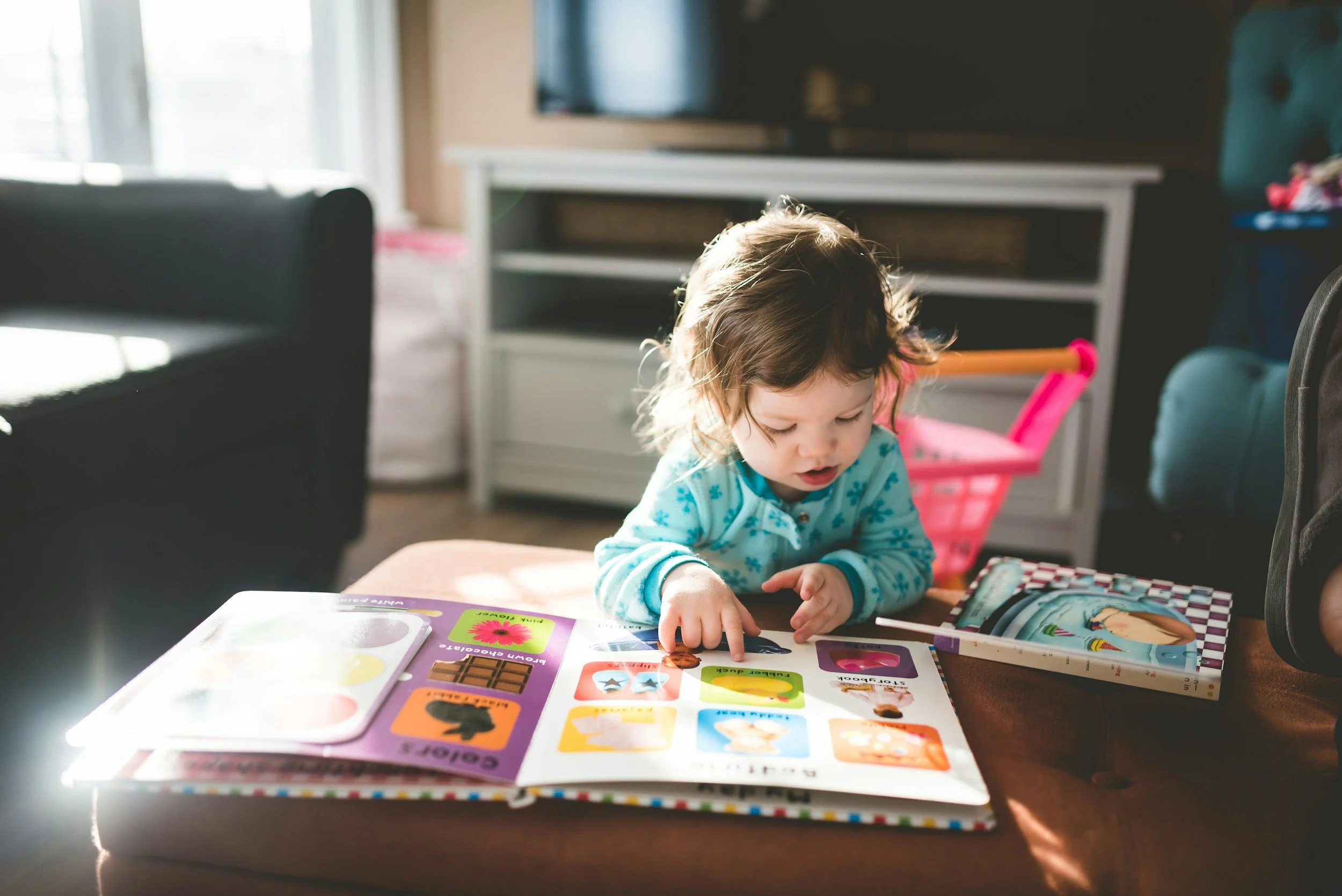
Interactive shared reading, where you pause to name pictures, ask simple questions, and follow your child's gaze around the page, produces stronger language outcomes than passive reading, according to multiple studies on early literacy and vocabulary growth. And reading the same books over and over is not boring. It is how children consolidate new words. Repetition is the mechanism, not the enemy.
Infant-directed speech (sometimes called baby talk) also plays a measurable role here. The exaggerated pitch, slower tempo, and clear word boundaries of infant-directed speech help babies pick out individual words and learn new sounds, which is exactly why it comes so naturally when you're reading aloud or narrating a routine.
Describing what's happening during bath time, meals, or a walk to the mailbox gives your child repeated exposure to meaningful vocabulary in context. "We're washing hands. Big bubbles! Now we rinse." Simple, specific, and surprisingly powerful.
Using pauses and choices to invite communication
Two techniques are especially useful for toddlers who are just beginning to find their words. The first is the purposeful pause: stop mid-routine and wait for your child to signal or vocalize before continuing. The second is offering simple binary choices, "apple or banana?", and then genuinely waiting for a response. Both create a natural reason for your child to communicate without any pressure attached. The goal is giving your child room to initiate, because initiation is the precursor to expressive language.
Why your baby's hearing check matters more than most parents realize
Many parents think the newborn hearing screen was a one-and-done step. It wasn't. Hearing loss is a common and often treatable contributing factor to speech delay, and understanding what the newborn screen does and doesn't tell you is genuinely important.
What newborn hearing screening actually checks, and what it doesn't
The two screening methods used in hospitals, otoacoustic emissions (OAE) and automated auditory brainstem response (AABR), test whether the inner ear and auditory nerve respond to sound at the time of screening. A "refer" result does not confirm hearing loss; temporary ear fluid or test conditions can produce one. But a refer result does require prompt follow-up with a pediatric audiologist, ideally with diagnostic testing completed by 3 months of age.
A baby who passes the newborn screen can still develop later or progressive hearing loss. Ongoing observation of your child's responses to sound and their language milestones matters throughout the first two years and beyond, a point reinforced by CDC guidance on developmental monitoring.
When to pursue hearing evaluation for an older infant or toddler
If your child shows inconsistent response to their name or environmental sounds, has limited babbling, has a history of recurrent ear infections, or has any family history of hearing loss, arrange a pediatric audiology evaluation before speech therapy begins. Hearing evaluation should come first when hearing is in question; the results shape the entire intervention pathway. Ruling out hearing loss early keeps everything on track.
When to stop waiting and reach out to a speech-language pathologist
Everything covered in this article points to one practical action: if something feels off, get information. An evaluation is not a verdict. It is a conversation with a specialist who can tell you clearly where your child stands and what, if anything, needs to happen next. If therapy is recommended, here is a closer look at how speech therapy helps a child with a speech delay.
What a pediatric speech-language evaluation actually involves
A certified speech-language pathologist will observe how your child communicates, plays, and responds during the evaluation. They'll ask you about developmental history, medical background, languages used at home, and your specific concerns. They may use play-based observation, parent questionnaires, and standardized assessment tools designed for this age group, such as the Preschool Language Scale or the Communication and Symbolic Behavior Scales.
The result is a clear picture of where your child is in both expressive language (what they can say and gesture) and receptive language (what they understand), along with specific recommendations. Bilingual and multilingual families, take note: vocabulary and milestone thresholds should be considered across all languages your child is learning, not English alone. A child who communicates effectively in the home language and shows age-appropriate overall development may have a language difference, not a disorder. A skilled evaluator will assess both.
How Speech Therapy For All P.C. makes it easy to take that first step
Speech Therapy For All P.C. works with families across Long Island and Brooklyn, offering both in-person and teletherapy options so that flexibility isn't a barrier. The practice focuses on the infant and toddler age group this article is about, and the team can walk you through insurance and coverage questions when you call. To get a sense of fees ahead of time, see our simple guide to speech therapy costs. For families enrolled in New York's Early Intervention Program, services for children under 3 are provided at no direct cost to the family, eligibility is based on developmental assessment, not income or insurance status, and speech-language pathology is a covered service under the program.
If you're not yet sure whether your concerns are big enough to warrant a full evaluation, that's exactly the right time to call. The team at Speech Therapy For All P.C. can help you figure out next steps without pressure. Reach out to start that conversation.
Noticing something and acting on it is not overreacting. It is exactly what engaged, caring parents do. The families who seek early evaluation give their children the widest possible window for support, and that window matters enormously in the first three years of life.
Ready to get answers? Request a free consultation with Speech Therapy For All P.C. or call 631-538-0579 to schedule an evaluation with a pediatric speech-language pathologist at our Holbrook, Shirley, Riverhead, Southampton, or Brooklyn offices, or through teletherapy.
When do infants begin to talk: frequently asked questions
What is the average age for a baby's first word?
Most babies say their first meaningful word somewhere around their first birthday, though the normal range spans roughly 10 to 14 months. "Meaningful" means the word is used consistently and intentionally, not just as part of babble. If no true words have appeared by 12 months, and gestures like pointing or waving are also absent, an evaluation is a reasonable next step.
Is babbling the same as talking?
Babbling is the foundation of talking, but it isn't talking yet. Consonant-vowel babbling ("ba-ba," "da-da") is healthy and expected from around 6 to 9 months. It becomes true speech when sounds are attached to consistent meaning. Watch for both, a baby who stops babbling after previously doing it regularly is worth evaluating promptly.
When do infants begin to talk in two-word phrases?
Two-word combinations, "more juice," "daddy go," or "big dog", typically emerge between 18 and 24 months. Their absence by the second birthday is one of the clearest referral thresholds in pediatric speech-language guidelines. If your child is approaching 24 months without any word combinations, request an evaluation rather than waiting.
Can bilingual children have speech delays?
Bilingual children develop language on the same overall timeline as monolingual peers when vocabulary is counted across both languages. A bilingual child should not be referred for evaluation based solely on smaller vocabulary in one language. What matters is the combined picture across all languages in the home. Speech Therapy For All P.C. has bilingual therapists on staff who understand how dual-language development works and can look at your child's communication across the languages your family uses, so a language difference isn't mistaken for a delay.
Still wondering when infants begin to talk, or whether your child's timeline is typical? An evaluation with a pediatric speech-language pathologist at Speech Therapy For All P.C. is the clearest way to get an answer grounded in your child's specific development, not averages on a chart.
